In a previous post, I mentioned that, according to the "new math" folks, 5th graders are not able to learn division of fractions. These 5th graders are just not supposed to be able to grasp that concept!!
Now, this is almost funny to me, yet it's sad. Talk about "dumbing-down". That's exactly what this is. Why, I've taught division of fractions for 17 years in 5th grade and students are able to learn division of fractions. They understand it too. And since I rather suspect that "understanding" division of fractions is what the "new math" people really mean, I want to share with you how to be sure that your student understands. It is a procedure that I have used for the last 8 years very successfully. And it is important to "hang" division of fractions to something the student already understands.
If your student is entering 5th grade, he/she may or may not be expected to learn division of fractions. Some curricula (fuzzy, new-math types) will wait until 6th grade because that's when your child can learn it!!
Here's how to guarantee that your child learns and understands division of fractions, whether they are learning it in 5th or 6th grade. Remember it must be "tied" to a previous concept, and that concept is division of whole numbers. If you are helping your child review or relearn "division of fractions" here is what you must do.
Teach your child to reread or (more properly) reword every division problem -- I'm speaking of division of whole numbers.
Example: 12 divided by 4 (Write the problem sideways using the division sign. Or teach your child to rewrite the division problem using the division sign if it is written another way.)
Your child needs to reread/reword that problem as follows: "How many 4's are in 12?" because that is what we are really trying to discover. I show the students that we are almost reading the problem backwards (and we are indeed mentioning the numbers in reverse order). But do not rewrite the problem. It is important that your student see the problem written as a proper division problem as he/she rewords it.
Have your student repeat this activity early on as he/she is learning division of whole numbers. Write a problem. Ask the question, "What are we trying to discover?" Then ask your student to reword the problem. ("How many 6's are in 24?" or "How many 9's are in 63?") Use craft sticks, pennies, or other small manipulative items to work on this if your student needs to "see" it. This rewording of the problem needs to become second nature to your child before division of fractions is introduced.
Using manipulatives can be helpful indeed, but as soon as the student learns multiplication facts, the manipulatives should be used less and less. And the facts need to be learned before division is taught. Remember, Division is the process of searching for the missing factor. So students must know the two factors for 63 (9 and 7), hence learning the multiplication facts from memory is so important.
Do not assume because you have your student reword a division problem a few times that he/she will do it automatically. Practice, practice, practice it. This needs to become a part of your child's thought process every time he/she works a division problem. It will be invaluable later.
Now, when it's time to learn, or review/relearn division of fractions, the student will be used to seeing the division sign in the problem 3 divided by 1/2 and the rewording will come easily. Have your student read the problem "How many one halves are in 3?" Remind your child: "That's what we are really trying to find out, how many 1/2's are in 3." Starting with whole numbers is really smart. Ask your child, "What are we trying to find out?" (how many 1/2's are in 3, or how many 1/3's are in 2)
[Later on you can try 1/2 divided by 1/4 or 2/3 divided by 1/6. Have the student read "how many 1/4's are in 1/2?" or "how many 1/6's are in 2/3's?" ]
Now, hopefully you have some fractional pieces, so that your child can use manipulatives to determine how many 1/2's are in 3 or how many 1/3s are in 2 [or later, how many 1/4's are in 1/2 or how many 1/6's are in 2/3].
Remember the important thing is that students learn to think "how many ----'s are in ----?"
There are so many (real life) problems that we could generate which will show students how we are going to use division of fractions, but I will save that for another post. And it will come shortly. (And by the way, you will notice that we can use real life situations in a traditional classroom without getting bogged down for hours or days.)
Wednesday, July 23, 2008
Teaching division of fractions
Thursday, July 17, 2008
Do You Live in a New-New Math City? State?
I've added a new link on the right to help you identify if you live in a "new-new math" city or state. There are even a couple of links with England and Canada.
You also are invited to contact them with information on your city if yours is not on the list. Send them your story, or your child's story.
Head First, Calculator Second
Wow, did I locate an excellent page on "fuzzy math" procedures and thoughts, entitled "Everyday (Fuzzy) Math is Dumbing Down our Children", written by Ian Shapira. You people in Virginia may have already read Ian Shapira's writings.
Some of his observations about Everyday Mathematics follow:"There is a 23-page chapter that teaches nothing but how to use a calculator." Shapira goes on to explain his own take on why so much space is used for teaching how to use a calculator: ". . . the odd algorithmic methods taught in the book for solving math problems are so confusing and unworkable that the students must resort to using a calculator in order to solve math problems."
"The most surprising thing is that the total number of pages in the book devoted to teaching algorithms using whole numbers is 11 pages! That's correct! There are only 11 pages in a 400 page book devoted to explaining algorithms using whole numbers. Only 3 of those pages offer instruction on standard algorithms. . . . On page 50 the book states: 'Finding a percent of a number is the same as multiplying the number by the percent. Usually, it's easiest to change the percent to a decimal and use a calculator.'"
"The preferred Everyday Math are crutches. The crutches are needed because the students are not taught the standard algorithms. The lack of skill in standard algorithms ends up crippling their ability to solve math problems without their crutches. The EDM crutches become cumbersome and hold children back when they are later exposed to to more advanced math problems. Their crippled minds are unable to sprint ahead in math, because they trip all over the crutches imposed upon them by EDM."
"One of the alternative algorithms that is a standard method taught in Everyday Math was authored by a first grader!"
". . . students are expected to invent their own algorithms. Adding to the silliness, the authors of Everyday Math expect the children to invent their own algorithms before they are taught any standard algorithms."
". . . The Everyday Mathematics advocates admit that the standard algorithms used for the past 100 years are 'highly efficient'. One might ask: If the standard algorithms are 'highly efficient,' why replace them with invented and other non-traditional algorithms? The reason is that the Everyday Math advocates are not satisfied with a 'highly efficient' method. They want the 'most efficient' method. In their view the most efficient method is 'mental arithmetic or a calculator.'"
There is so, so much here to read. This article helps all of us identify "fuzzy math" programs, whatever they may be named. Everyday Math is only one, and they all do their damage. The sad thing is, once the damage is done, it's very difficult to go back and redo 4,5,8 years of damage.
Fuzzy Math -- trying to make math more "interesting"
Here is another "public comment to the national math panel" from yet another college professor and author, J. Martin Rochester, Ph. D.
In his letter, Professor Rochester states the following:
"Fuzzy math . . . has been driven by the same constructivist paradigm and same dumbing-down, populist impulses that gave us the now discredited "whole-language" pedagogy in English. That is, in place of the old maxim 'no pain, no gain,' we now have the new maxim in K-12, 'if it ain't fun, it can't be done.' Under the guise of 'critical thinking' and 'problem solving,' which are ubiquitous buzzwords in every discipline in today's schools, fuzzy math is trying to make math more 'interesting'. . . . The new math deemphasizes and devalues direct instruction, drill and practice, basic computation skills, and getting it right -- getting precise, correct answers. Forget rigor -- the key concern here is to alleviate bordom and drudgery for mathphobes and those who suffer from math anxiety."Dr. Rochester's letter, short but dead on, is must reading!!!
New Battles Every Year
A few years back, when I first got word that there were math wars going on, it was because a parent told me what she was learning by searching the internet. She had discovered that our middle school curriculum was rated quite low by Mathematically Correct. And why was she searching? Her daughter was struggling through the 6th grade curriculum and she was initially looking for something to help her daughter.
As I searched, I came across "math wars" and "fuzzy math" and "new math" and "new, new math" and were my eyes opened to what had been going on for years in California, in New York, in Illinois, in Plano, in Penfield, in Utah . . . it just kept going on and on. And I realized that I had been in the dark about all of this. That was back in 2004, 2005.
And as I searched to learn what was causing all of the wars, I read about the college professors who had spoken out years earlier, and who were continuing to speak out and who were taking an active part in making known their concerns of what was happening at the universities because of the math taught at lower levels.
I saw what I thought was the beginning of some success in stamping out the math curricula which were causing all of the confusion and problems, and I breathed with a sigh of relief that perhaps things were getting better for those folks who had fought so relentlessly to get rid of their bad math programs, (after, of course, so much damage had been done to their own children).
* * * * * * *
Now I see that "math wars" are springing up again and sadly now another group of students is suffering and struggling in places such as Florida and Missouri.
And now another group of college professors is speaking out against what they see happening.
The "fuzzy math authors" do not give up so easily. They have their fingers in their ears and masks over their eyes. They refuse to believe that their precious, new math curricula are the cause because after all, "research shows" that students need to learn by discovering and investigating, that students remember best what they figure out on their own without any interference from the teacher, that students need to know they are valued.
In a Missourian article entitled "Math Professors Seek Change in State's K-12 Math Curriculum", college professors are quoted expressing their concerns with the state's math standards and the curriculum. Below is a quote from Missouri Univerisity math professor Adam Helfer:"One of the most painful things for me as a math professor at Missou is to work with students who have native ability in math but are not going to be able to capitalize on it because their K-12 preparation is inadequate. There is just nothing that can be done at the college level to make up for this -- it's far too late."
Another MU math professor, Alex Koldobsky, is also quoted in the article:"I have been teaching Calculus I for the last few years and I clearly see the deterioration of computational and algebraic skills of incoming freshmen. Instead of working on the concepts of calculus, the majority of the students have to think for a long time about every elementary arithmetic and algebraic step, which at this point have to be automatic for them."
More than 50 math professors signed the letter, critical of the "student centered focus" which dominates the Missouri K-12 standards -- which repeatedly prescribes that students 'explore', 'investigate', 'develop models', and 'conduct experiments'.
Go here to read the entire article, and while reading it, take the time to go to the side link to the 9-page letter (5 pages of which are signatures of college professors) dated May 5, 2008, sent to the Missouri Department of Elementary and Secondary Education.
If you live in the state of Missouri your children may be affected by the weak standards and "fuzzy math" curriculum. If you are in other states, you need to be vigilant to what is being taught in your state. This is not going away.
Wednesday, July 16, 2008
"Fuzzy Math" Faces Revolt in Texas
Because I teach in a private school, this all slipped right past me! I've just discovered that my own state had at one time adopted a "fuzzy math" curriculum, Everyday Mathematics.
I am so proud of the Texas state school board. They have responded to the complaints of many people in a number of school districts, and they have dropped that curriculum. Thank you, Terri Leo and others on the board for listening to parents, teachers, and district board members.
Go here to read the story. Be sure to scroll down and read the letters from parents at the bottom. Thank you Elizabeth Carson for letting us all know who Jesse Arnett is and why he writes with such strong support of Everyday Math.
Here is the story at Edwatch. Scroll through this page because there is so much linked here.
Tuesday, July 15, 2008
Interactive Concept Development
I'm reading through the Overview and Implementation Guide for enVisionMath, by Scott Foresman-Addison Wesley (Texas). Because I am used to a traditional, instructivist curriculum, where the teacher guides the student step by step through the lesson, teaching algorithms to help students with knowledge and understanding, I just naturally have some concerns. So, how "new math", how "fuzzy math" is this math textbook?
(My principal stated, as she was giving me the materials, that there were many group activities for developing new concepts and I might want to look over them. Hmmm.)
Several things JUMP out at me.
On about every page so far: "Research says . . ." followed by an explanation of what enVisionMath provides. (There are lots of "Research says . . ." explanations.)
I notice that this seems to be TAKS (our Texas test) driven, and I see that all of the 20 topics are designed to be covered prior to the spring date for students' taking that test.
[One of my prior posts (Expectations Need to be Measurable and Concepts Need Time) referred to an article by William H. Schmidt, where he explains that "top-achieving countries" focus on fewer concepts so that teachers can cover them in depth, rather than the many (up to 20) that our country's math curriculum force teachers to cover.]
And I see that these 20 topics are covered in about 127 lessons (so they can be covered prior to the TAKS), some topics being covered in as few as 4 lessons. So some of the topics are small, bite-sized that hopefully are reinforced throughout the year. I hope there is built-in reinforcement. I'm hoping . . .
Uh-ohhh! Here it is! Interactive Learning
Research Says that students learn best when they have opportunities to interact with teachers and with other students. . . [Research says] Problem-based instruction (before making math concepts explicit) enhances learning because it gets students actively engaged in thinking about a problem and shows students that their thinking is valued.
Teachers are instructed to pose the problem, asking students to work in groups on a problem and share their thinking "before receiving teacher guidance that makes the math explicit".
Before making math concepts explicit ???
And I see lots of writing, writing to list and explain the steps you used, writing to explain what you and your partner decided to do to get the answer and why you chose that method.
Oh my!!!
And while these interactive groups are working, teachers are to be making sure that students are discussing what they are doing and that they are using the proper language and vocabulary in their discussions. How on earth can a teacher be listening to 10 pairs of students at one time to be sure they are using proper math language????
This is why teacher directed instruction is so important. When I teach (prior to the group practice) and when I make concepts explicit (prior to group practice), I can also make sure students practice explicit oral vocabulary (prior to group practice).
More later . . .
Tuesday, July 1, 2008
Why memorize facts?
One day, few years back, my principal called me in to her office. She knew I had been researching "new math" and "fuzzy math" and she had a related question.
It seems that a parent of a younger-aged student had questioned why their daughter needed to learn math facts. The teacher of the girl's class had been working on speed drills for math facts and the father was disputing the need for knowing the facts. My principal wanted to get my take on the subject.
The battle is on-going indeed.
So, is memorization of math facts important? You or your student will be confronted with this dilemma, sooner or later, and we need to be prepared. "New math" tells you your child doesn't need to be forced to do the pencil and paper work of the "drill" of traditional math. Your child needs to learn what "8 X 9" actually means, and he/she can always calculate by drawing groups. But your child will understand how to do it, and that's what is important!
According to an article in the March 14, 2008 issue of The New York Times, a recent report, presented to Education Secretary Margaret Spellings by the National Mathematics Advisory Panel (March 2008), addressed the importance of mastering the basic facts.
The report stated that it is important for students to master their basic math facts well enough that their recall becomes automatic, stored in their long-term memory, leaving room in their working memory to take in new math processes.
"For all content areas, practice allows students to achieve automaticity of basic skills -- the fast, accurate and effortless processing of content information -- which frees up working memory for more complex aspects of problem solving," the report said.
According to the NYT, the report found that "to prepare students for algebra, the curriculum must simultaneously develop conceptual understanding, computational fluency, and problem-solving skills."
The report also said that prekindergarten-to-eighth-grade math curriculum should be streamlined and should focus attention on skills such as the handling of whole numbers and fractions.
Read the entire article here.
By even the 5th grade, the number of steps in problems necessitates that students know those facts quickly so they don't get bogged down in recalculating the facts several times while solving the problem.
The above report stated that by 3rd grade students need to have addition and subtraction facts mastered. By 5th grade, students need to have multiplication and subtraction facts mastered so that they are quickly put to use.
So work with your student on math facts. This is one thing students can do over the summer. Practice, practice, practice.
Monday, June 30, 2008
Girls Learn Differently?
Well, evidence does show a difference in the way girls learn and the way boys learn.
Many years ago, I read a very interesting article (It's been so long I can't even remember where.) revealing that studies suggested that girls learn math best when they can talk and discuss it aloud.
As an experiment, I have often allowed girls opportunities to work with a friend. I've watched the girls as they progress from problem to problem and they were off task very little. Rather, they helped keep each other focused. But the interesting thing to me was they manner in which they used reasoning skills to solve problems.
I've just read an article that is promoting "all girls' schools and classes." I'm not supporting this type of school, although I have nothing against it. But the information on how girls' brains and how boys' brains work is of interest. I'm passing along the link here.
So if you have an opportunity to try this, it's pretty simple to do. There just needs to be a couple of rules to make it work. Talking is required, but the discussions are about the assignment, not about "what we are going to do this weekend," or "who we saw at the mall".
I've had girls in my class, ones who were quick to pickup new concepts, ask me, "Mrs. . . ., may I help her with problem 2?" I allow it and find that rarely do girls dislike working with a buddy.
Gabby's Story, Part 2
(If you're reading this blog for the first time in a few days, refer to the previous entry before reading this second part.)
It was easy to figure out how Gabby felt about something. And you knew, everybody knew, when Gabby didn't get something in Math. She spoke right up and told you, for any and all to hear, in no uncertain terms, that she didn't get it.
"I don't get it!" she would say.
The good thing about her was that she really wanted to understand. And I've found this to be true for all students, not only those who speak up. They want to understand. They want to get what everyone else gets. They hope it will make sense.
So when Gabby blurted out, right in the middle of class, it was NOT to annoy me, or to disrupt the class, or to get attention and be the class clown. She truly wanted help.
And so it was, in one of the last weeks of school, as she was at my desk, getting my help, and talking herself through what she knew to do, and solving the problem, she told me this story:
During a previous year, she had been unable to understand long division, as it was being introduced. She had spoken up (boldly, and loudly, I'm sure, because that was Gabby's style) to say that she didn't understand, at which time the teacher had sent her to the board. And apparently she struggled and struggled as she worked at the board, trying to remember what to do next. And it took her a long time to understand with her teacher going through the steps and telling Gabby what to do from her desk. And when at last she did it properly, the teacher had said, "Well, FINALLY she gets it!"
(I need to say right now that I know the teacher, and I'm not going to make judgments on what might have happened before or during the episode. I don't know what she did to teach the students or how she presented that lesson. And I do not get into discussions with students about what a previous teacher has said or done. That conversation is "off limits".)
So I told Gabby that I was sorry that it had happened to her and said something like," I'm can tell that it made you feel bad."
Gabby continued, "I went home and told my mom and she was mad about what happened. And it really made me feel bad and hurt me a lot to be embarrassed in front of the class."
Notice.
It had hurt her.
It had made her feel bad.
It had embarrassed her.
BUT, it had not stopped her from asking questions, thank goodness.
Putting this last piece of the puzzle with all of the other parts of Gabby's math experience in 5th grade, I marveled at her boldness and determination, all the more. She had been willing to take the risk. She had been willing to be "first" to ask for help. She had been willing to be the "only" one, if necessary, in order to be able to understand.
She needed extra time with new concepts and with word problems. She needed to be able to move objects around and handle them. She needed to talk about Math as she worked it. And when she was allowed all of that extra time, she could "get it". And it gave her confidence.
Gabby was one of those students I've written about before. She learned it by "doing" it, by repeatedly "going through the steps", by the actual effort of moving the pencil and doing it. And in her case, by talking out loud about it. And because she "got it," she felt successful.
And one last time, let me say that when she got it, everyone knew she got it, because she announced it with great elation.
She had to work hard for what she got, but she she didn't mind working. And she never made less than a B all year.
If kids think you are willing to help them, they don't mind asking for help. If they think you will keep explaining it until they understand, they don't mind asking questions. If they think there is hope, they don't mind working. And when they know that you, the teacher, or the parent, or a helper, care, they will risk being the only one because they really do want to know and they want to succeed.
Saturday, June 28, 2008
"I'm Not Good at Math"
Gabby, I'll call her, entered fifth grade like a ball of fire. She was very outspoken about what she liked, what she disliked, and what she thought about everything in general. She announced early on, "I'm not good at math."
I'm used to these comments, but I've learned that only a few students are brave enough to speak them aloud. And I'm so thankful for those few kids who are, because they afford me the chance to explain some rules for my math classes:
- It's OK not to understand something in math. I will never fuss at you if you don't understand.
- If you don't understand, you must tell me so I can help you. When I know you don't understand, I'll think of another way to teach you, and even another, until you get it.
- No one is "dumb". Even if you feel "dumb", you are not "dumb". It just means that no one has ever explained it so you could understand.
I usually have two or three students per class who feel they are not good in math. Some students will go so far as to say, "I hate math." For others, it's just the defeated, "I've never been good at math," or the rip-roaring "I stink at math."
Now, I have to say that I truly love having the bold students in my classes because they break the ice. They get the ball rolling. They make it "OK" for anyone else to have trouble. They make it "permissible" for other students to speak up. These "go-get-em" kids really are an asset because even though I have told the students that I want them to ask questions, I've found that nobody wants to be the "first" or to appear to be the "only" one that needs help. And for the extremely shy student who also happens to be weak in math, it is grueling to expose himself/herself. He/she would prefer to just blend in with the furniture as to be found not "getting it."
So, I take advantage of the first opportunity and reply to the "Miss Gabbies", "Good for you for telling me. Look at all of these other kids in the room. Some of them are probably wanting to ask me something also. So now we're going to show them how it helps you to ask me."
Now, I know these "Gabby" types. Not only are they very vocal about what they don't get, but they are equally vocal about what they do get. So, I know what's going to happen next. And sure enough after a little bit of extra help at her desk, Gabby suddenly exclaims, "Oh, I get it!" or "Oh, that's easy!"
Then, I might quicklly say, "Now, try this one." And I mentally construct a similar problem, one that Gabby can solve, so she can have some immediate success and confidence-building.
Students soon learn that if they ask for help, I'm not going to come right out and tell them the answer or what to do. I'm going to get them talking about the problem. If it is a word problem, I'm going to have them read it to me, in parts. (Students who struggle with word problems usually make the mistake of reading the whole problem, without seeing the different parts.) After the student reads the first part, I'll stop her and ask her to tell me what she knows from that part. I sometimes ask students to draw a picture (maybe a map) of it. Then I ask her to read the next part. And I find out if she can properly explain what that tells her. So often a student at this point will suddenly exclaim, "Oh, so that means . . .", and they are able to tell me exactly what they need to do to solve. This was especially true for Gabby. She would inevitably talk her way right through the problem. Her face showed that the "light bulb" had come on. At this point, I always then tell her, or any other student, "See, you didn't need me at all. You figured it out by yourself!"
That response from me is important -- it makes the students see that they can think through the steps if they are on their own, and it gives them confidence.
Gabby was always quite vocal about her "light bulb" moments. The whole class would know that she had gotten it; in fact, they would know the exact moment the light came on for her!!!. Toward the end of the year, she would bring her book to me or if I was near, call me to her desk, and the question would begin with something like this: "OK, here's what it says. There are 3 girls . . ." and she would immediately start talking and explaining to herself and to me . . . and then she would stop dead in the middle of a sentence . . .
"It's so easy when you help me!" she would say. And then I would answer, "But I didn't even say a thing. You did it all by yourself!"
During these one-on-one times with Gabby, I might pull out yarn (to be used to help figure the perimeter), or some counting sticks (to be used for perpendicular or parallel lines or for sets), or pie pieces to help with fractions or percent, whatever I could find, to give her extended hands-on time. And this became her "discovery" time, but it wasn't in a large group, and it wasn't a huge, hour-long time. It was one of the many such "discovery" moments that occur during any good math lesson, moments that many children need and take advantage of, to nail down a concept, to "discover"; and that discovery time needs a reservoir of knowledge from which to draw. One bit of knowledge (the new stuff) hangs onto another bit of knowledge (the old stuff) and some students need just a little more time, connecting those bits, at which time -- "DISCOVERY!!"
So Gabby continued throughout the year, readily acknowledging her deficiencies and her need for help, and talking herself through most all of the things she needed help with.
My goals for her, as they are for any student who enters my room afraid of math, were that she start talking (not particularly hard for Gabby) about what she is doing, or about what the problem is telling her, and that she learn to think, really think, through what she was reading and how she could arrive at the solution/answer. She had to learn that I probably would not tell her what to do, but would help her learn to analyze what she needed to know.
She wavered throughout the year, back and forth from being discouraged to being positive, but her confidence grew. And she continually thanked me for helping her, and I continued to tell her that she hadn't really needed me, that she had figured it out by herself.
And one day near the end of the year, she told me something, an event from a previous school year, that made my heart break for her, but I'll have to wait until next post to pick up that part of Gabby's story. It showed me that even though a person may seem tough on the outside, he or she may be crying on the inside, and those "heart tears" are just as real as the ones all the rest of us can see on the outside.
Friday, June 27, 2008
Knowing Leads to Understanding
You have to "know" math before you can "understand" math; you have to "know" math before you can "do" math; you have to "know" math before you can "solve math problems".
The above is a paraphrase from a long article by William G. Quirk, Ph. D. in Mathematics.
In this article, Quirk explains that even though the National Council of Teachers of Mathematics has toned down their push for "new math", "constructivist" math, fuzzy math, (probably in an attempt to calm the uproar caused by their original 1989 Standards), they still push student-centered "discovery learning"
[On April 12,2000, The National Council of Teachers of Mathematics (NCTM) released Principles and Standards for School Mathematics (PSSM), a 402 page revision of the NCTM Standards.]
Translation: NCTM sees the error of their ways in the 1989 Standards and so here comes the 2000 Standards in which they pretend to drop all of this "fuzzy" stuff, such as emphasizing calculator skills or student-invented procedures and now appear to emphasize mastery of basic facts.
I think the NCTM must be more patient that the opponents are persistent. They know that if they just give the appearance of change, the "math wars" will subside, we will drop our guard, and then they will be able to come back with terms redefined and no one will notice. They they will be free to unleash, once again, their confusing, dumbed-down ideas on a new and unsuspecting group of children, families, and school districts.
Oh, yes, they say, we are all for "putting arithmetic back into mathematics." We are all for "teachers emphasizing the fundamentals of computation." And the public, with a sigh of relief, smiles and thinks "Oh, isn't that wonderful! The "new math" is gone! Traditional math will return at last! Our children are now safe!"
And we fail to read the fine print:"When calculators can do multidigit long division in a microsecond, graph complicated functions at the push of a button, and instantaneously calculate derivatives and integrals, serious questions arise about what is important in the mathematics curriculum and what it means to learn mathematics. More than ever, mathematics must include the mastery of concepts instead of mere memorization and the following of procedures. More than ever, school mathematics must include an understanding of how to use technology to arrive meaningfully at solutions to problems instead of endless attention to increasingly outdated computational tedium." --NCTM
Quirk helps us understand that although NCTM says they want to emphasize "understanding", they fail to understand how the brain works. Says Quirk,
". . . they still fail to recognize that specific math content must first be stored in the brain as a necessary precondition for understanding to occur. Although rarely the preferred method, intentional memorization is sometimes the most efficient approach. The first objective is to get it into the brain! Then newly remembered math knowledge can be connected to previously remembered math knowledge and understanding becomes possible. You have to "know math" before you can "understand math", "do math", or "solve math problems.
"Similar to the orignial NCTM Standards, PSSM fails to clearly acknowledge that the abililty to instantly recall basic number facts is an essential preskill, necessary to free up the mind, first for mastery of the standard algorithms of multidigit computation, and next for mastery of fractions. Then, once this knowledge is also instantly available in memory, the mind is again free to focus on the next task level, algebra.". . . . . .
OK, it boils down to what you want your student to be able to do:
Master the basic facts or Derive basic facts when neededIf basic facts are mastered, students can proceed quickly through multidigit computations, particularly when learning a new concept. Their minds are free to focus on what is new, rather than having to also repeatedly derive methods and facts to help them get through the steps.
. . . . .
The entire article really upset me because it makes statements about students' inability to learn how to properly use division of fractions. I've taught division of fractions for 15 years very successfully using Saxon Math. I strongly refute the statement by PSSM that the "process can seem very remote and mysterious to many students."
When presented properly and taught properly, students are indeed able to grasp the meaning of "invert and multiply". Students are indeed able to learn and understand the concept of dividing 1/2 by 1/4, or 1/3 by 1/6 and "the reasoning" of "How many 1/4's are in 1/2?" And students are indeed able to identify the types of story problems where division of fractions is the preferred method to find the solution.
Read the entire article here.
. . . . . . . .
The article concludes with some excerpts from Roger Howe, Professor of Mathematics at Yale University, several of which will be quoted here:
"An important feature of algorithms is that they are automatic and do not require thought once mastered. Thus learning algorithms frees up the brain to struggle with higher level tasks."
". . . we suspect it is impractical to ask all children personally to devise an accurate, efficient, and general method for dealing with addition of any numbers -- even more so with the other operations. Therefore, we hope that experimental periods during which private algorithms may be developed would be brought to closure with the presentation of and practice with standard algorithms."
"We do not think it wise for students to be left with untested private algorithms for arithmetic operations -- such algorithms may only be valid for some subclass of problems. The virtue of standard algorithms -- that they are guaranteed to work for all problems of the types they deal with -- deserves emphasis."
Thursday, June 26, 2008
The "Real" Contest
Have you ever gotten into a "battle" only to find the opponent has changed and redefined all of the terms?
Have you noticed that the publishers often try to change the focus of the disagreements brought by parents. Or they change definitions and throw out new "standards" so that you and I may not even know what the real issues are.
As a lowly intermediate, elementary school math teacher, I often feel that I do not have the qualifications to step up and confront more "learned" people. I think that no one would even give me any time. However, if you won't listen to me, will you at least hear the words of math professors, who know far more than I, and who strongly oppose the teaching of the "fuzzy math"??
A few years ago when I first became aware of the "math wars" that had occurred, and were still occurring, all across the country, I was most impressed by the pleas of professors to rectify and rewrite curricula, professors such as Dr. Wayne Bishop, Dr. James Milgram, Dr. Wu, Dr. Bas Braams, and many more.
Below are a few quotes from Ralph A. Raimi, professor emeritus of mathematics of the University of Rochester, describing the "real contest" in this "math wars" saga and the folly of expecting children to "discover" formulas and procedures on their own.

"But there is a contest, a serious one, and not the one suggested by catch phrases handed out by the publishers of the reform programs. It is not a contest between rote-memorization of meaningless symbols and deep understanding of problem-solving strategies. . . "
"The real contest in Penfield - and hundreds of other school districts across the country - is between mathematics and non-mathematics, between academic content and childish time-wasting, between what children can learn and what the present Penfield curriculum is pretending to have them "develop." A good mathematics program takes advantage of the mathematical discoveries of thousands of years of civilized effort, while Penfield has them counting with sticks, starting history all over again."
And the following from Raimi is scripted so purely and simply, so precisely and beautifully and is certainly worthy of notice. I'll even go so far as to say it is worthy of putting to memory.
"The systems of decimal and fraction notation are marvels of compressed information, intellectual advances that Euclid did not have available. Arithmetic is not trivial mathematics, and it certainly will not be "discovered" by school children. It must be taught and practiced."
The entire article, entitled "Why American Kids Aren't Learning Math," may be found here.
The Ant and the Grasshopper (a modern day story)
Alongside a trail in the open Field of Mathe, a Grasshopper was lazing about, discovering and coloring patterns to his heart's content. A lone Ant passed by, bearing along, with great toil and rigor, a bag of corn he was planning to store, yet singing as he labored. Because he knew the facts, he had accurately analyzed his problem, quickly calculated his needs, while carefully considering the 'rithms' of the seasons.
"Why not stop and discover patterns with me," said the Grasshopper, "instead of toiling and moiling (grasshopper speak for "drilling and killing") your life away? You'll be much happier sitting and chitting about your work than making your repetitious rounds." The Grasshopper continued, "That Trail of Boredom you are on becomes the Path of Monotony just over the hill, you know." (Surely, he thought, this was a factor the Ant had not considered.)
But the Ant was undeterred. And he wasted not a step, still singing as he 'plotted' along, for practice had made his search for the missing factors all the easier.
"By the way, my feelers are 'Connected' to my feelings, you see?" said the Grasshopper, everyday still lazing on the trail. "I'm feeling soooo good about my discoveries. I need to be writing about the work I'm going to be doing after I finish discovering what I'm supposed to learn to do. Care to join me?"
"No, thank you. I'm preparing for what's ahead," said the Ant, as he 'Sing(ingly)Poured' his full bag into his storage bin. And off he went to glean more from even higher p(m)aths. "Quit your Trail lazin' days, Mr. Grasshopper. Get up and get to work."
"Oh," said the Grasshopper, "there's still plenty of time. But for now, this writing about my discoveries is just about filling up my hours. But I'll be 'Blazing this Trail' later."
Sadly, the Grasshopper never got past his Trail lazing days. You see, though over 'Andover' he tried, he found that he had to continually 'spiral back' to the place of his discoveries in the '(o)Penfield'. He never made it off the Lazing Trail nor did he ever reach the top of the Field of Mathe.
However, the Ant had all he needed. Not only did he successfully reach the top of the Field, he became the King Ant of the Field of Mathe, all due to his rigorous work and efficient use of time. And he ruled over the Grasshopper all his remaining days.

Wednesday, June 25, 2008
Hilarious Math
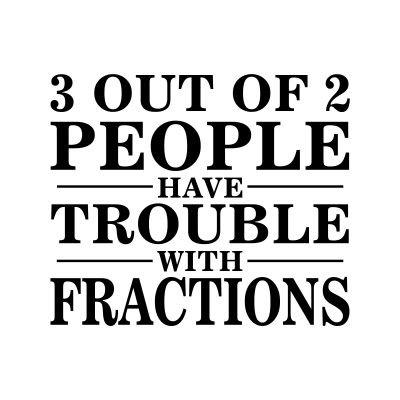
So, I share with you some quotes from an old book entitled Kids Sure Rite Funny, written by Art Linkletter of Kid's Say the Darndest Things TV fame. Growing up, I always enjoyed watching him interview those little children, knowing that the parents were in the audience and that Art Linkletter was going to do his best to get those children to say something funny or embarrassing.
In his book, Kids Sure Rite Funny, Linkletter shares from the writings of kids across the country. The book was published in 1962. If you should come across one at a garage sale, grab it. You will be entertained for years to come. I don't know how many times I've read these quotes, but they are funny every time.
(All spellings are the children's, as so spelled in the book.)
Hope you have a good laugh.
"A hypotenoose is a humane device for hanging criminals from a 90 degree angle."
"If your triangles get four sides, you have wrectangles."
"In area, a circle is a pie or square."
"Why I am taking algebra is because I hear that some thoughts cannot be thought without thinking in algebra. Although I have never had such thoughts, I am expecting."
"The minuend is the number from which the minuet is subtracted."
"Square objects are rectangular while round ones are tubercular."
"When rulers are not human, they have twelve inched feet."
"A tangerine is a line going past a circle."
"If you are looking for an X, algebra will help you find it."
"Axioms and postulates are the same. We have both of them in case we forget the word for one of them."
NCTM Focal Points (Standards)
According to this bulletin from the National Council of Teachers of Mathematics, there are apparently three (3) focal points identified for each grade level, PreK-8.
Here are the focal points, followed by excerpts from NCTM's explanation.

- the use of the mathematics to solve problems;
- an application of logical reasoning to justify procedures and solutions; and
- an involvement in the design and analysis of multiple representations to learn, make connections among, and communicate about the ideas within and outside of mathematics.
"These curriculum focal points should be considered as major instructional goals and desirable learning expectations, not as a list of objectives for students to master."
". . .this set of curriculum focal points has been designed with the intention of providing a three-year middle school program that includes a full year of general mathematics in each of grades 6, 7, and 8."Go here to read entire bulletin.
My observations:
No matter how good these focal points (expectations) sound, don't kid yourself that they intend for your child to master them. These focal points are not to be considered "as a list of objectives for students to master." That isn't considered to be important to NCTM. Notice, however, that it is considered important that they learn to communicate about the ideas they are learning. And don't be surprised if that communication is written.
And . . .
If states and districts follow these suggested standards, your students will likely fall short of the goal of most families -- completion of pre-algebra and algebra by the end of 8th grade.
Tuesday, June 24, 2008
Group Discovery ???
One of the marks of "new math" is discovery learning. But it's more than just discovery learning; it's "group discovery learning". Students are expected to come to knowledge of mathematical facts and procedures through "communal discovery".
You've heard it before. Only what your child discovers himself will he really grasp and remember. He must "own it" to be able to "use it and truly know it".
Now, let me see. If we want everyone to make the discovery himself, why would we put them in a group? That is exactly the opposite way you have every person discovery on his own. The whole group discusses and comes to an action, tried and agreed upon by the group. (Of course, someone in the group had to make the suggestion, to begin with, but never mind that.)
Now, remember through all of this, the purpose is for each student to make the discovery for himself -- so he can "own" that knowledge.
If you're in a group, how can all students come to "discovery" -- of a math procedure -- at the exact same moment? Someone in the group will come to the discovery first. Must he or she remain absolutely quiet? Must he hide his procedure? Remember this is a group discovery.
So, if someone else in the group makes the discovery, I guess no one else ever gets to "own" anything! Be First or Lose Your Shot at It.
By the way, the teacher is very quietly staying to the side, offering no guidance. And once the answer is agreed upon, the teacher is not allowed to check to see that the procedures were used correctly. Later, no drill will be given for students to use for practice. And there is no memorization of facts -- the facts can be 'rediscovered" on the spot, whenever they are needed.
In a traditional classroom, a teacher gives students an opportunity for small discoveries throughout the lesson, but he or she carefully directs the lesson and teaches precise methods, so that all students learn the most efficient procedures. Then the students practice and practice the steps under the supervision of the teacher. Following the guided practice is the independent practice, during which kids do more practice. Teachers are available to guide students and reteach if necessary. It is during this practice that some students "discover" and learn. And as the procedures are practiced over the next days and weeks, still other students may finally make the discovery on their own. But that "discovery" is just as real as the "discovery" made earlier by other students. In the meantime, the student has been able to successfully get the proper answer on the work because the teacher had taught just that.
I disagree that there is no discovery in a traditional classroom. There is. I see it every day.
And I don't think that it is possible for all students in a new math room to "discover" every single fact and procedure without input from the teacher.

Pay Attention to a Child's Individual Bent
This is an especially fun story for me to recall because it involves my precious nephew. He was my first nephew and I was in college. We were all amazed to see his early interest in numbers and marveled at his insatiable appetite to learn about them. No one forced him to sit down and listen. No one made him memorize anything. His parents just sort of scratched their heads and watched it all unfold.
He had an early desire to know more and more. We soon figured out that as he was mulling over the answers to his questions, he was properly putting it all together in a way none of us imagined. On his own he figured out that the symbols for the numbers meant something.
He didn't fit any of the models I was studying in my college childhood education and psychology courses. None of us knew how he did it. He was just too little to explain to us what was happening in his mind.
Here's how it played out. It started with his asking us "What is 3 and 5?" "What is 4 and 7?" We never knew where that idea to ask those questions came from, but as long as we were willing to answer, he kept firing those questions. It was nonstop and it never seemed to be enough. What 3 1/2 - 4 year old normally does this?
I think we all thought it would run its course and play itself out after a while. But it didn't. His mind was an unquenchable little sponge and the questions, always related to numbers and groups of numbers, kept coming.
But those simplle questions soon became "Daddy, what's 38 and 5?" "What's 57 and 8?" And when his daddy was tired, aunts and uncles and grandparents were the next victims. And all that we told him, he took in and somehow analyzed it correctly. And the questions became more precise, showing that he was honing his skill.
We started turning the tables on him. We started asking him questions and were just blown away with what happened. This little guy had somehow figured out sets of "tens" in his mind. He knew how to regroup and go past tens. He could answer anything we asked him. And he was right on the money -- every time.
He could subtract, too. He could add and subtract 8's or 7's just as easily as you or I.
He was not really any smarter than his siblings. He just had a bent toward math concepts. For some reason it was a challenge, it was compelling, it was satisfying to him. To him, the mental computations were enjoyable, and even something difficult didn't set him back. He kept wanting to know more.
His questions turned to money and how much things cost, and even multi-step procedures didn't make him waver.
One evening, my husband and I took him to a small airport in our area to watch the commercial planes come and go. He asked us a question (number related, of course).
"How much would it cost to fly to . . . (a nearby town)?"
My husband said, "Oh, about $5," mostly just to give an answer, rather than to be accurate. Immediately, my nephew shot back, "Well, I'm saving my money till I have $30, and I'm going to take you both to . . . . (the town)."
He had added and multiplied so rapidly, we were stunned. He even planned on our return flight!
If your child has such an appetite, such a natural bent toward math, nourish and encourage it. Provide opportunities for him to grow. Make sure he doesn't languish in a "fuzzy math", "non traditional" classroom. You may not think that the misguided approach of "new math" can have a detrimental affect him, but it can.
Or if your child doesn't show an early interest, provide opportunity for little baby steps of counting and of understanding numbers and make it fun. He/she could be a late bloomer. He can make good progress with just a little encouragement and interest from a parent. And make sure he doesn't languish in a "fuzzy math", "non traditional" classroom. He could likely be at the most risk because he is neither strong or weak and can easily slip through the cracks.
And if your child really does struggle and it never gets easier, just keep being your kid's biggest fan and biggest encourager. Don't ever show your disappointment in him, and don't give up just because he/she doesn't have a natural bent. Support him and praise him for even small gains. And for certain make sure he doesn't languish in a "fuzzy math," "non traditional" classroom. Be prepared for an early intervention with tutoring and evaluations. Make sure he learns to ask questions. And he must know he can come to you. And give him room to excell in something else -- art, or music, or helping people.

Monday, June 23, 2008
Money, the Logical Hands-on Teaching Tool

Having taught at the same private school for many years, it only follows that I have taught several brothers and sisters of many families. I've never expected younger brothers and sisters to mirror their older siblings, but I've also noticed that they often do because of the parents' expectations. Parents who expect diligence and responsibility from their children usually have an entire household of diligent and responsible children.
One such case that puzzled me for several years was the inability of children from one particular family to count money, to make money exchanges accurately, to make change involving bills and coins, and to solve general word problems involving money. This was especially baffling considering I teach 5th grade and it is unusual to have one child, let alone several, who can't make small change accurately and easily.
And then I figured it out. These children apparently were never required to be responsible for the money they were given by their parents or for bringing accurate change back home. If one of them needed money for something, the student would be given a $20 bill with no thought for what he/she was expected to bring back home. In this one case, the lunch cost $4.50, and the student had no idea what change to expect. I discussed it with her and she wouldn't even try to reason through it. All she did was just shrug and say "I have no idea" or "I don't know" to every query I made.
So begin early and teach your children how to exchange 5 pennies for 1 nickel, etc. Have them count money (and remember to start at zero when counting). Give them small amounts of money to purchase something and discuss ahead of time overpaying and expecting change from the clerk.

Do you save pennies in a jar? This is a good way to involve your child in a family project. Count the money by the week or month, depending on the child's age. Have the child help you swap nickels for the pennies. Then later swap dimes for nickels, etc. This helps teach your child equivalent amounts.
One game that is fun for children can be played in the car as easily as it can at the breakfast table with coins. Say to the children, "How much money do I have? I have 1 quarter and 1 dime." As children learn to solve these problems, ratchet the game up a notch to this next level: "How much money do I have if I have 2 less than 3 quarters, 1 dime and 1 nickel?" Children in second and third grade can get these problems. Then try going past the dollar, but do not mention dollar bills. "How much money do I have if I have 3 more than 6 quarters, 2 dimes and a nickel?"
Give students reasoning problems, but call them "riddles". "Here's a riddle for you. Bill has 5 coins. What five coins did he have if he has 38 cents?" At first, this can be done with coins in hand, but as children get older, they need to be able to solve this type of problem mentally.
Use money to begin teaching tally marks. More on tally marks in another post, but money is an easy way to get your children to think of counting by sets of numbers. And remember counting is the beginning of solving abstract concepts in numbers. Make sure you do a lot of counting.
Have a pretend store at home. Tell your young children that you are practicing what to do at a real store. Teach them to make change. However, the true goal should be more. You want your children to recognize incorrect change. Explain to them that this is "Wrong Change" day at the store. Tell them you are going give incorrect change for a pretend purchase, and have your child figure out what is incorrect.
Expect your child to be responsible and accountable with any money, even his own. Do not pass it out to him/her like it was candy. Children will value its importance if you value it, and will learn to value it enough to want to know how to use it wisely.
Geometry of Today is Not Geometry of Yesterday
I'm pulling up old stuff, I know, but you can't get better than Barry Garelick.
Barry posted this comment on the first Kitchen Table Math back on June 5, 2005.
"From NCTM's PSSM, here's what NCTM has to say about their geometry standard: 'Geometry: Geometry has long been regarded as the place in high school where students learn to prove geometric theorems. The Geometry Standard takes a broader view of the power of geometry by calling on students to analyze characteristics of geometric shapes and make mathematical arguments about the geometric relationship, as well as to use visualization, spatial reasoning, and geometric modeling to solve problems. Geometry is a natural area of mathematics for the development of stusdents' reasoning and justification skills.'"
Translation: High school geometry used to emphasize proofs. Now it just emphasizes shapes and formulae, with an occasional proof and in general is not much more advanced than the geometry presented in 7th grade, except for the fact that not much geometry is presented in 7th grade."
My observations and thoughts:
NCTM is the National Council of Teachers of Mathematics. They are a body of educationists (my word) who are responsible for writing the national math Standards which are supposed to define the expectations for students in each subject area at each grade level. I say "are supposed" because the expectations are so watered down and are so vague that no one can actually identify a specific expectation.
You have to hunt far and wide to find geometry in textbooks today. This "broader view" is part of that "1/8 inch deep and a mile wide" approach to teaching Math. The subject of Geometry is spread all through other textbooks and is no longer taught in a coherent fashion semester by semester.
A high school teacher commented to me 2-3 years ago how much he wished he could teach geometry as an isolated subject so he could concentrate the students' focus on geometry.
Your student is probably being robbed of the opportunity to learn to prove geometric theorems. It's no wonder our high schools students score so much lower than Asian students.
